

Create public and private key pairs
Create a public/private key pair for a user connecting to a Linux server using OpenSSH.
Use ssh-keygen to create the key pair.
This time, we will create a key set using the RSA cipher used in the SSH protocol Version 2.
The creation of a public/private key pair is performed with remote login user privileges (e.g., huong).
If you do not specify the destination and file name, id_ed25519 and id_ed25519.pub will be created in /home/huong/.ssh/. On the way, enter the password for the key.
# su - huong
huong@Lepard:~$ ssh-keygen -t ed25519
Generating public/private ed25519 key pair.
Enter file in which to save the key (/home/huong/.ssh/id_ed25519):
Created directory '/home/huong/.ssh'.
Enter passphrase for "/home/huong/.ssh/id_ed25519" (empty for no passphrase): ←Pssword
Enter same passphrase again: ←Pssword again
Your identification has been saved in /home/huong/.ssh/id_ed25519
Your public key has been saved in /home/huong/.ssh/id_ed25519.pub
The key fingerprint is:
SHA256:NDhDsjNBvQnxrhB/t0GRIJzIbi5U63jeFVCgJVGwjmI huong@Lepard
The key's randomart image is:
+--[ED25519 256]--+
| . BXB=o.. |
| o.OO…. |
| .oo=.o+ | | .=+ +o . |
|oE+.. o S |
|+..+ o o o |
| .o o . . |
| . . |
| |
+----[SHA256]-----+
$ chmod 700 ~/.ssh
$ cat ~/.ssh/id_ed25519.pub >> ~/.ssh/authorized_keys
$ chmod 600 ~/.ssh/authorized_keys
Save the generated private key id_ed25519 to the Windows directory c:\USERS\user\.ssh\ using winSCP
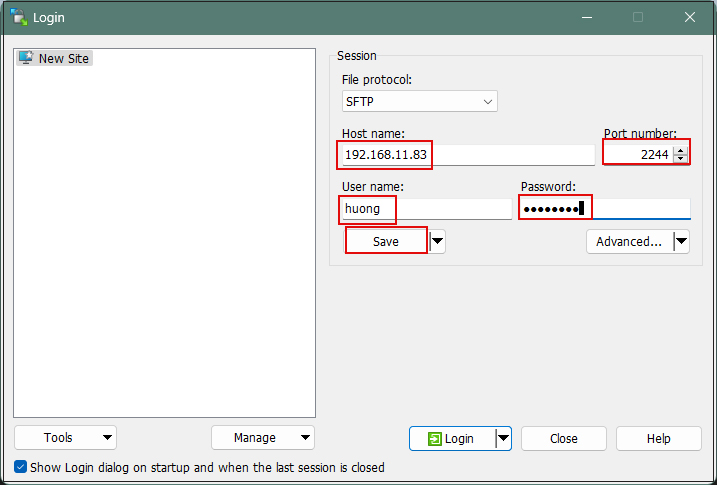
Start Winscp
Host name : Server IP Address
Port number : SSH Port
User name : Server Login User
Password : Password for the same user
and then "Save".
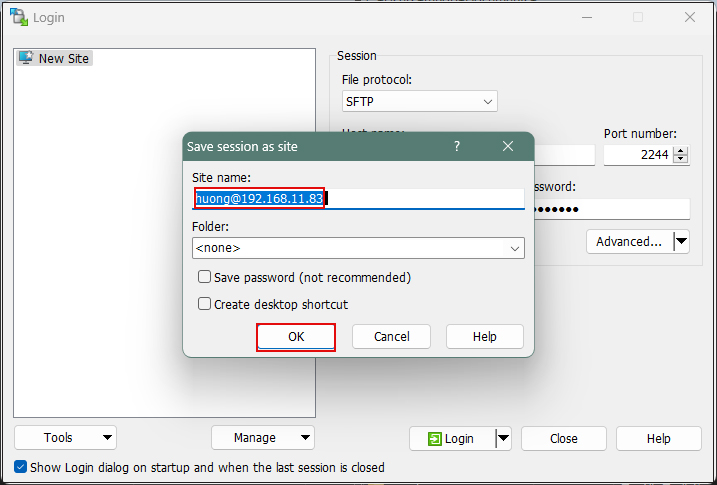
Site name : Any name
Click "OK"
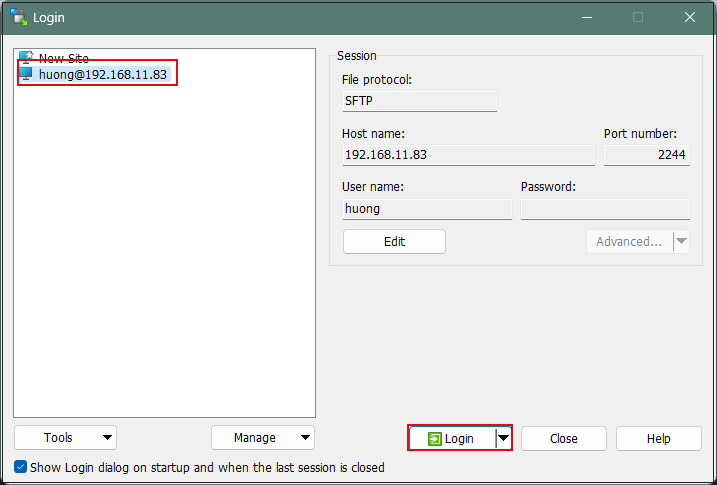
After confirming the server, click "Login".
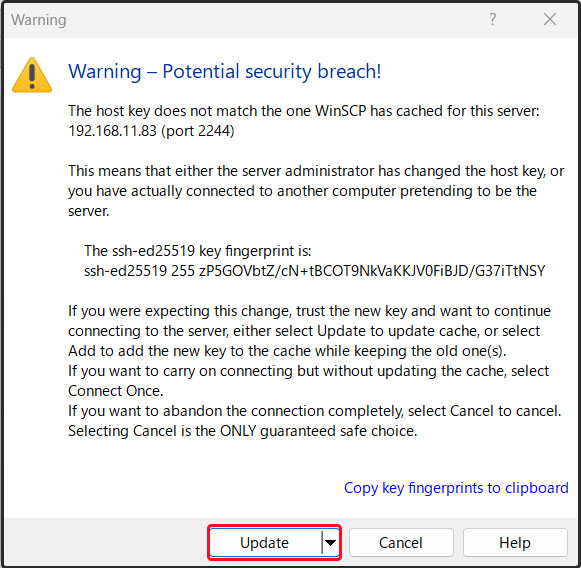
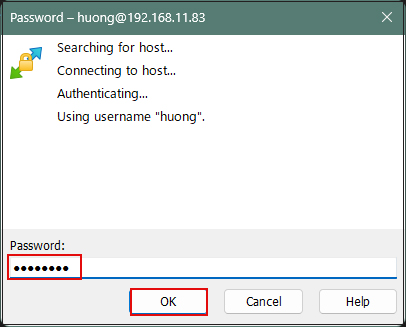
Click "Update" when the following screen appears
Password of the logged-in user in the Password field
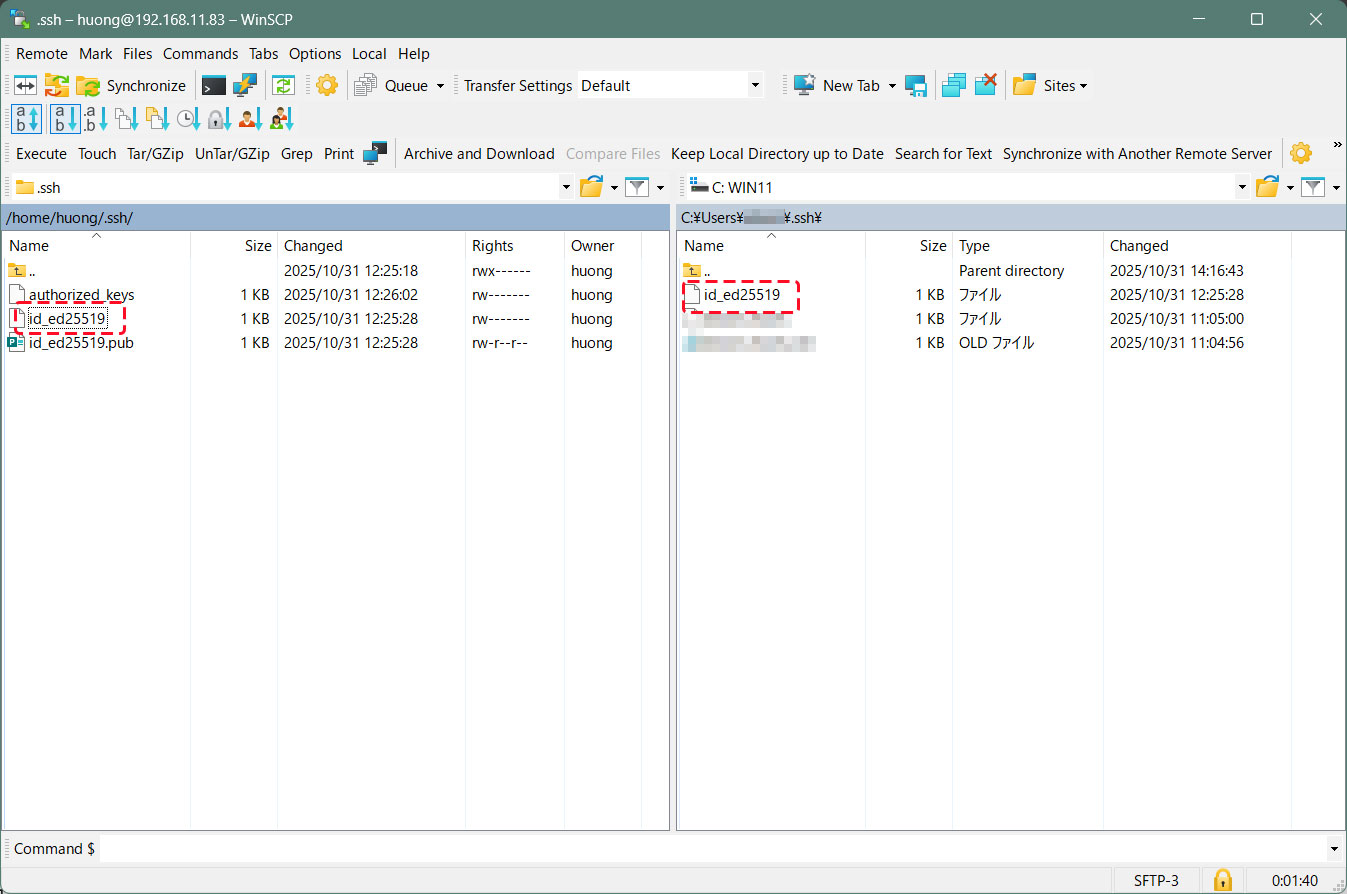
Once connected, the left pane shows the server side, and the right pane shows the PC (Windows) side.
Copy the "id_ed25519" file located in the .ssh directory to the Windows directory[c:\USERS\user\.ssh] on the right side.
Editing SSH Configuration File
Edit the SSH configuration file to disable password authentication.
This time, instead of being an ordinary user, su - to become root.
$ su -
Password: ←root password

# vi /etc/ssh/sshd_config
Around line 58: Uncomment and change to disable password authentication
PasswordAuthentication no
Restart the sshd service
# systemctl restart sshd
How to connect using Tabby Terminal
Specify the key using the option [-i c:\USERS\xxxxx\.ssh\id_ed25519]
C:\Users\xxxxx>ssh huong@192.168.11.83 -p 2244 -i c:\USERS\xxxxx\.ssh\id_ed25519
Enter passphrase for key 'c:\USERS\xxxxx\.ssh\id_ed25519': ←[The password created when generating the public key]
Linux Lepard 6.12.88+deb13-amd64 #1 SMP PREEMPT_DYNAMIC Debian 6.12.88-1 (2026-05-15) x86_64
The programs included with the Debian GNU/Linux system are free software;
the exact distribution terms for each program are described in the
individual files in /usr/share/doc/*/copyright.
Debian GNU/Linux comes with ABSOLUTELY NO WARRANTY, to the extent
permitted by applicable law.
Last login: Tue May 19 08:35:05 2026 from 192.168.11.6
huong@Lepard:~$
Creating a private key using PuTTYgen
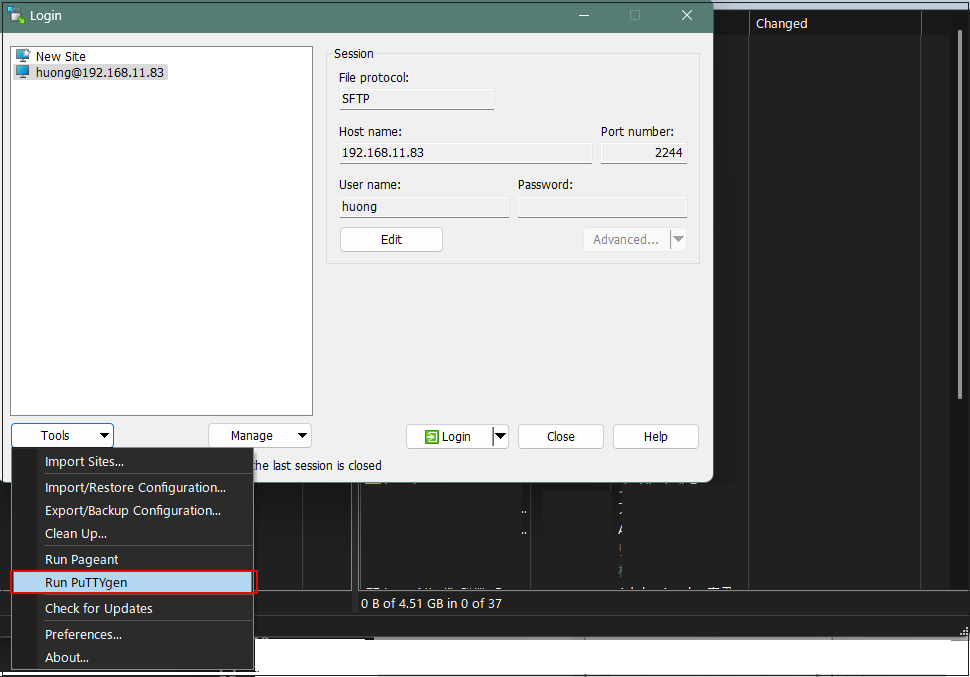
Launch WinSCP, select the relevant server, and then click [Run PuTTYgen] under "Tools."
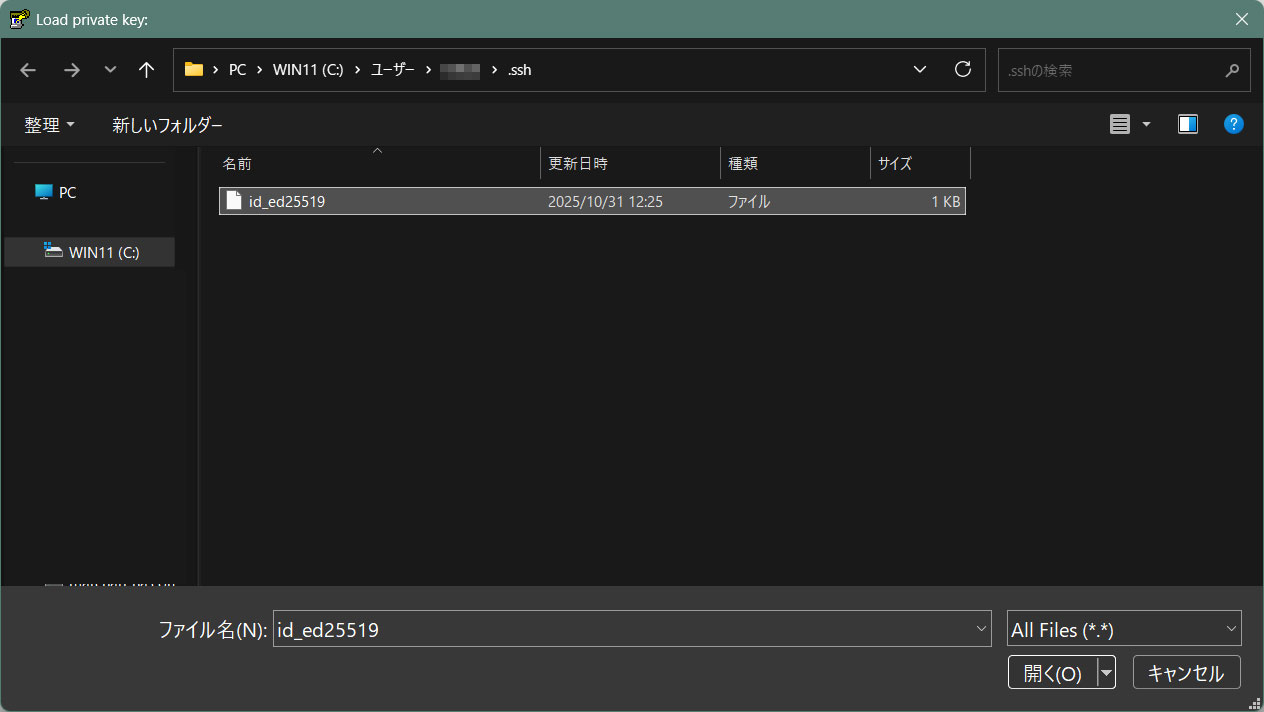
Click Load
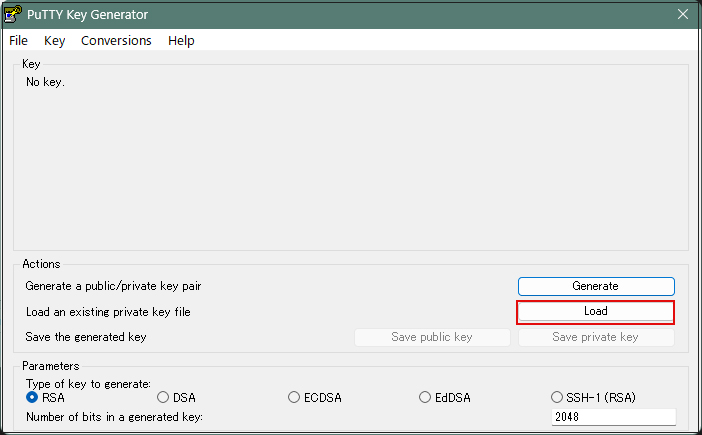
The [ Open File Dialog ] will open, change the file type to [ All Files (. Change the file type to [ All Files (. *) ] and load the private key id_ed25519 that was transferred from the Linux server.
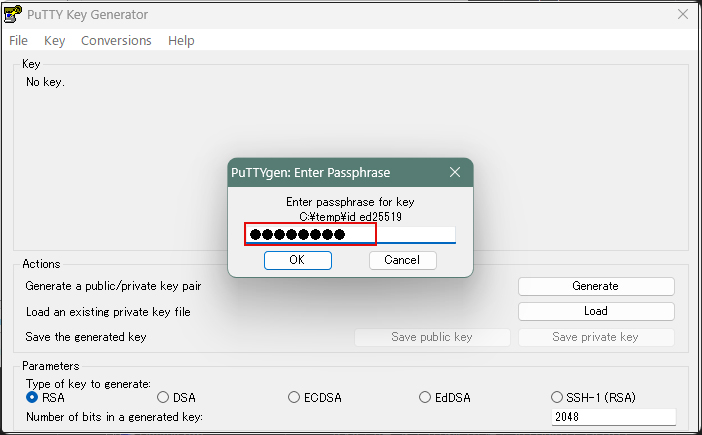
The password is the password set in "Creating a public and private key pair" above
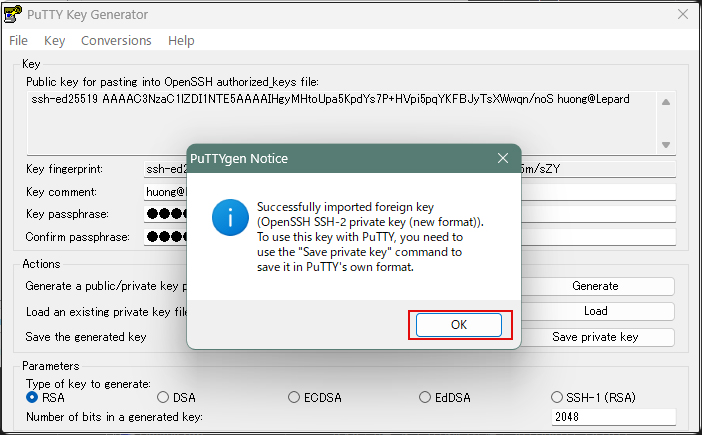
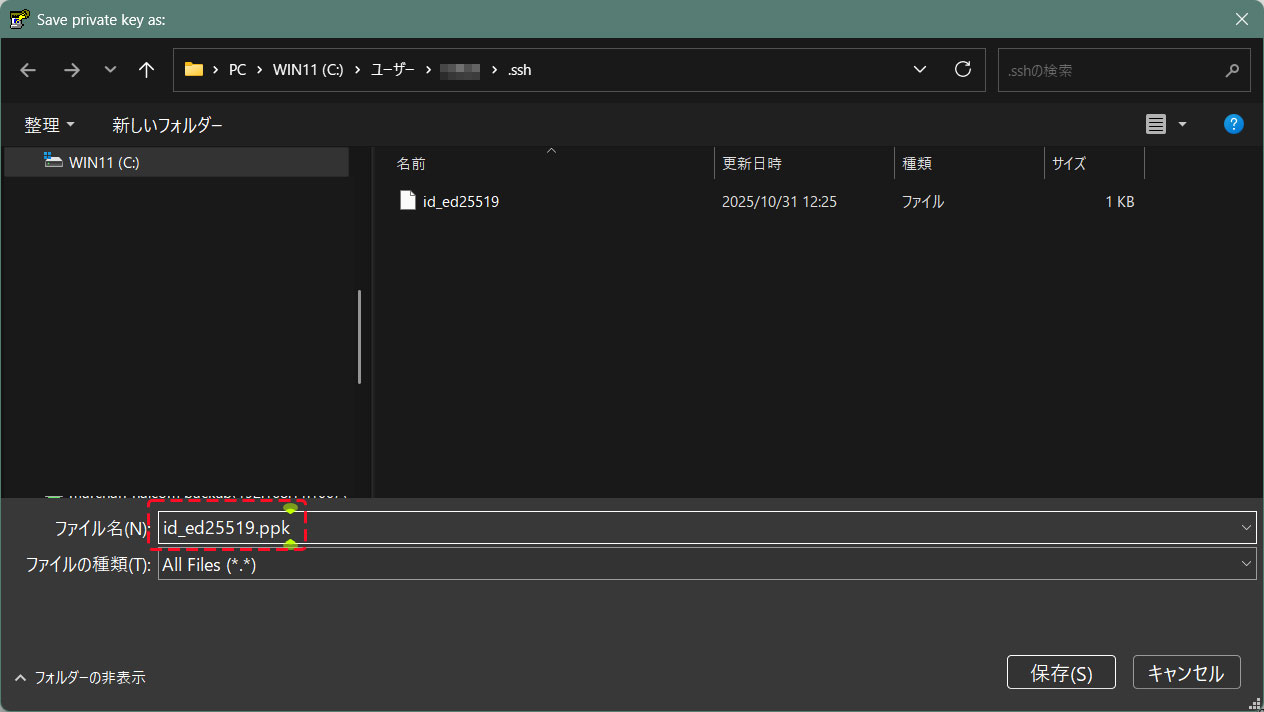
Click on "Save private key"
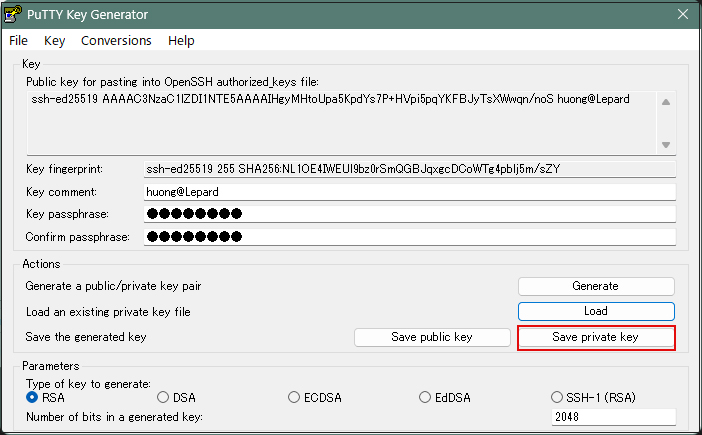
Save the file with the extension ".ppk" in the same place as "id_ed25519" saved earlier on the Windows side under the name "id_ed25519.ppk".
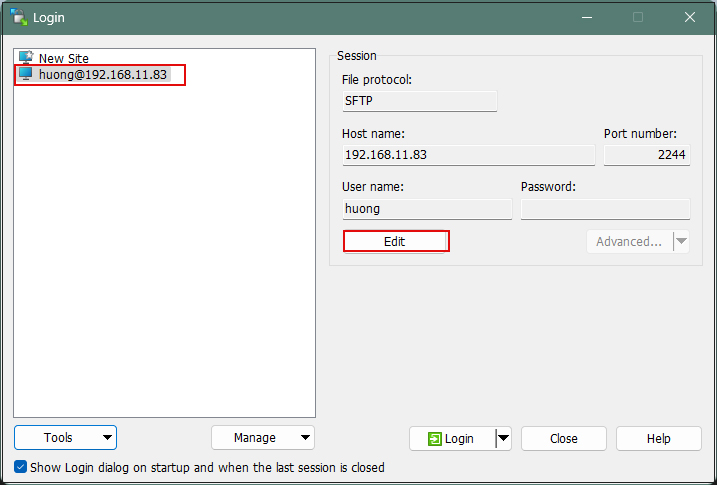
Select the target server and click "Edit".
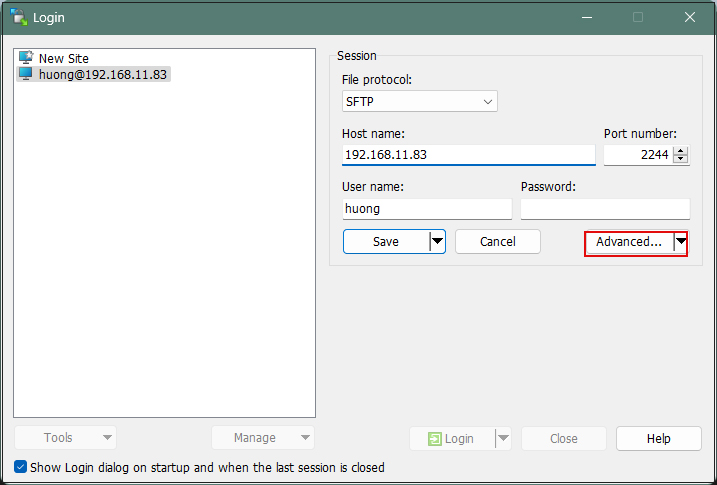
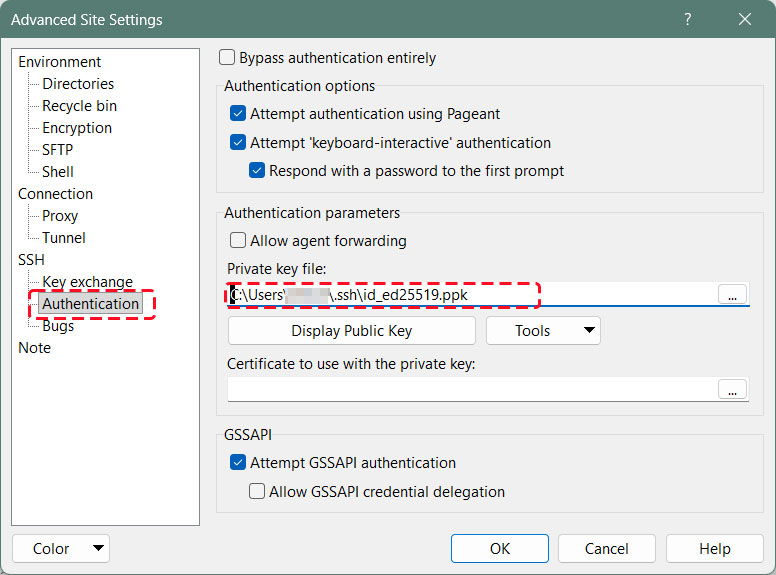
Click on "Advanced"
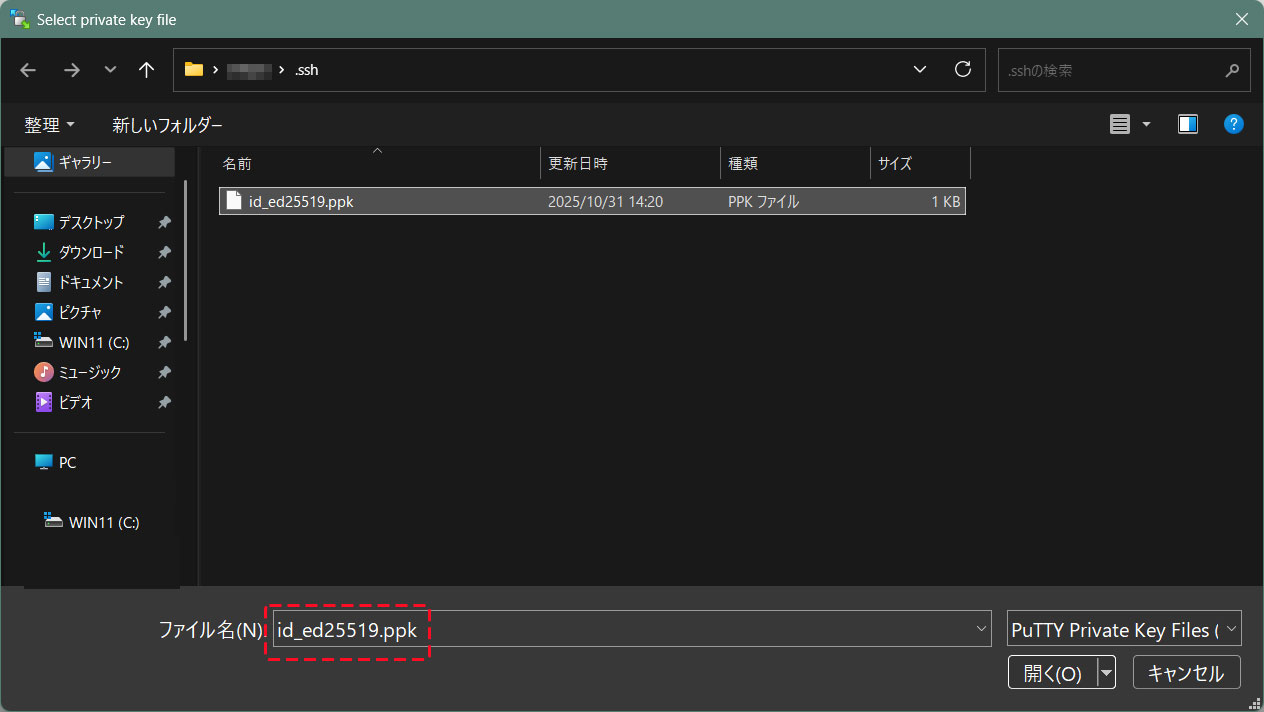
Open the "Authentication" menu and specify "id_ed25519.ppk" saved in Windows for "Private key file
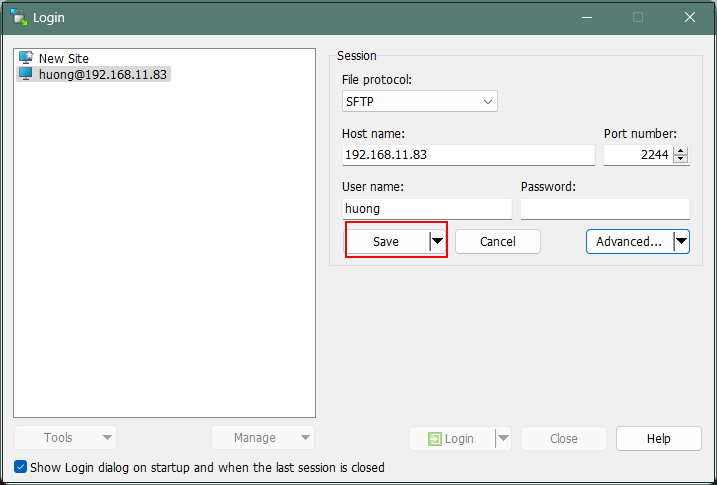
Click "Save"
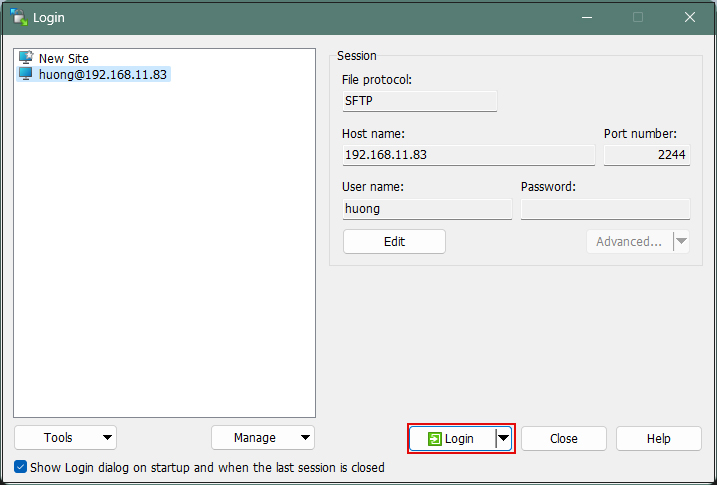
Click on "Login"
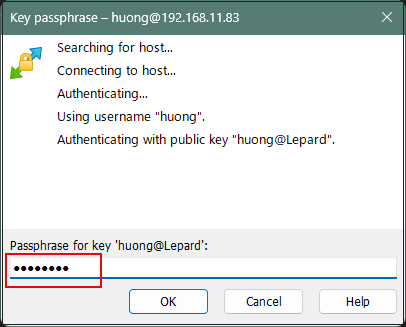
The password is the password set in "Creating a public and private key pair" above
When connecting via Tabby Terminal, do the following:
C:\Users\xxxxx>ssh huong@192.168.11.83 -p 2244 -i c:\USERS\xxxxx\.ssh\id_ed25519.ppk
Enter passphrase for key 'c:\USERS\xxxxx\.ssh\id_ed25519.ppk': ←The password specified when creating the public key
If you encounter an error like the one below, convert your private key to OpenSSH format.
C:\Users\xxxxx>ssh huong@192.168.11.83 -p 2244 -i c:\USERS\xxxxx\.ssh\id_ed25519.ppk
Load key "c:\USERS\xxxxx\.ssh\id_ed25519.ppk": invalid format
Launch [WinSCP] > [Run PuTTygen], then import the private key under [Import key] in the [Conversions] tab.
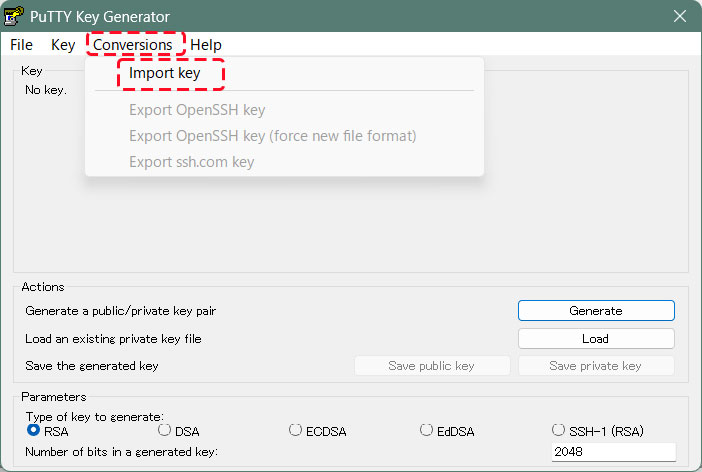
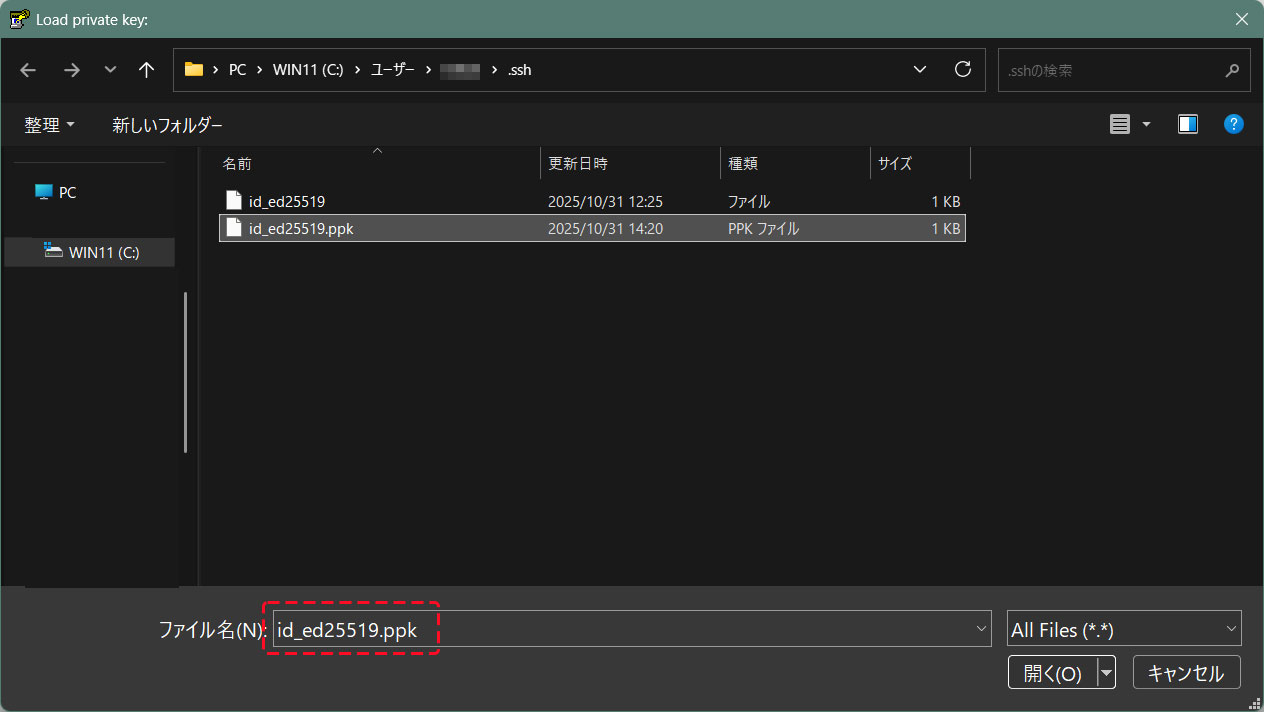
Convert the imported private key to OpenSSH format and save it under a different name
The password specified when creating the public key
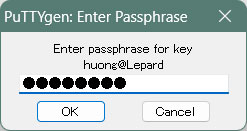
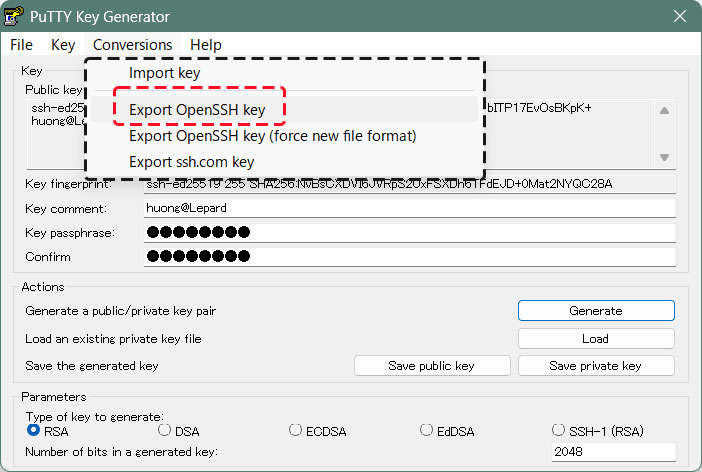
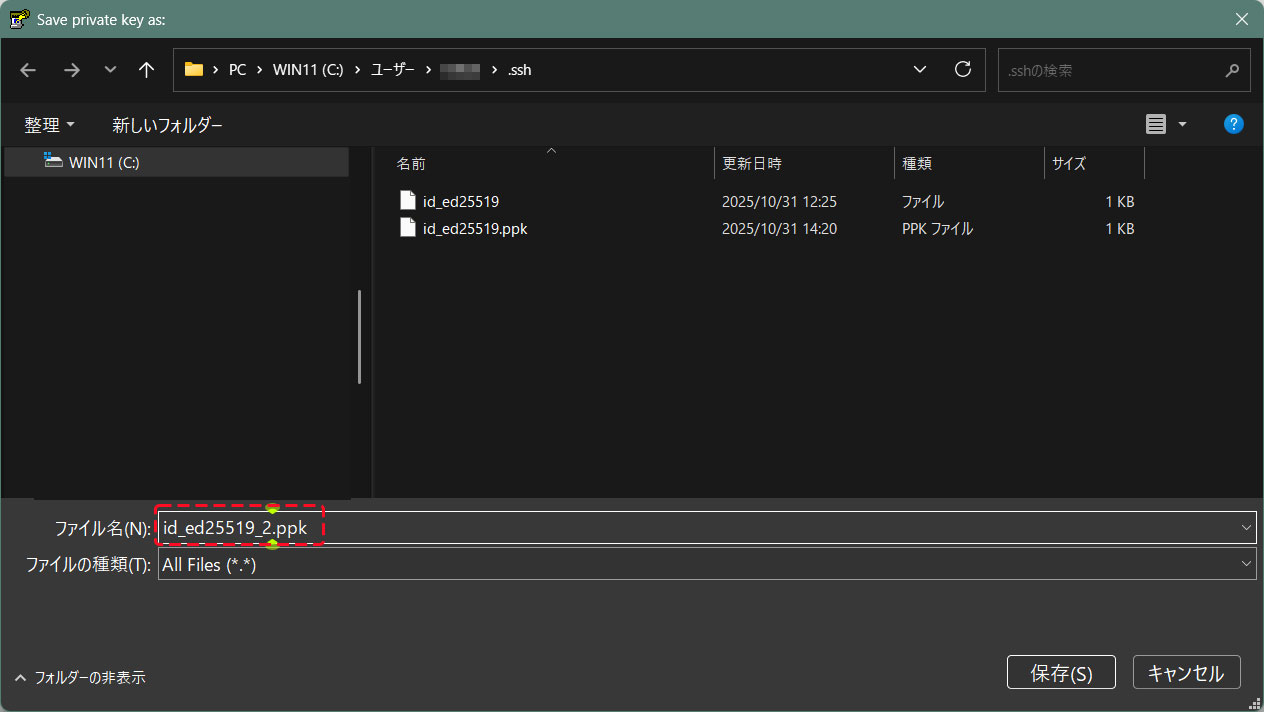
You can connect as follows
C:\Users\xxxxx>ssh huong@192.168.11.83 -p 2244 -i c:\USERS\xxxxx\.ssh\id_ed25519_2.ppk
Enter passphrase for key 'c:\USERS\xxxxx\.ssh\id_ed25519.ppk': ←The password specified when creating the public key
Linux Lepard 6.12.88+deb13-amd64 #1 SMP PREEMPT_DYNAMIC Debian 6.12.88-1 (2026-05-15) x86_64
The programs included with the Debian GNU/Linux system are free software;
the exact distribution terms for each program are described in the
individual files in /usr/share/doc/*/copyright.
Debian GNU/Linux comes with ABSOLUTELY NO WARRANTY, to the extent
permitted by applicable law.
Last login: Tue May 19 09:32:43 2026 from 192.168.11.6